Theatre Program Entry – George Hickey

“Es de Lope…” 

There’s a good reason that things of exceptional quality are ‘de Lope’ in Spain; el mosntruo de la naturaleza Lope de Vega’s contributions to Spanish literature are perhaps only shadowed by his contemporary, Miguel de Cervantes. Born in 1562 and famed to have completed his first play at age 12, Lope is widely heralded as the creator of the comedia nueva, and on account of his veracious creativity and ability to produce works of literature (penning some 500 plays in his lifetime) his works have stood the test of time, remaining prevalent and current into the modern day.

Working primarily in Madrid, Lope redefined Spanish theatre and the form of the three-act comedia at a time when theatre grew to be a mass cultural phenomenon, moving away from the three unities of time, action and place; and using the ‘language of fools’ to appeal to and entertain the masses.

The play…

El santo negro de Rosambuco explores the conflict between white and black members of contemporary Spanish society. Set in a time when black enslavement became part of Spanish Culture, the play follows an Ottoman soldier named Rosambuco who is captured in battle by Don Pedro Portocarrero and so our story begins…

Following his capture and subsequent enslavement, which he accepts with saintly humility, Rosambuco falls into the hands of Lesbio and Laura, his master and mistress respectively. Lesbio, accusing his wife of adultery, commands that Laura be killed, but Saint Benedict miraculously intervenes and saves the innocent Laura. Witnessing this miracle Rosambuco converts to Christianity.

In the second act, Rosambuco meets Lucrecia, a black maid who tempts Rosambuco sexually and tests his faith and sanctity. ‘Saved’ by a miraculous serpent that appears and scares Lucrecia away, Rosambuco is saved from temptation.

In the third act, Rosambuco is confronted by his foil, Pedrisco, who questions Rosambuco’s sanctity based on the colour of his skin. In a thrilling culmination, demons emerge to condemn Pedrisco and save Rosambuco, but in doing so Lesbio is gravely burned in the fire that ensues after the emergence of the demons. In a final act of piety and humility, Rosambuco offers his life in Lesbio’s stead, the final stage of his saintly transformation, ascending to heaven and the promise of purity.

With stunning and innovative use of puppetry and special effects, Lope’s masterful play is brought into the modern day, watch the visually stunning miracles unfold onstage, and allow yourself to be transported into Lope’s world of the mystical and divine on earth.
Article Summary – George Hickey

In his chapter titled El santo negro Rosambuco de la ciudad de la Palermo, o el negro sumiso, Baltasar Fra Molinero explores the dichotomy of race and religion in Lope de Vega’s hagiographic play. Fra Molinero begins by addressing the titular paradoxes of a black protagonist Rosambuco possessing a saint’s humility, and of Rosambuco being connected with Palermo, a “white” city and not a fantastical, exaggerated version of Africa. It is through this contemporary lens of the contrasting ideologies of Europe and Christianity versus Africa and Paganism that Fra Molinero tackles the issue of blackness and representation in this text.

Firstly, Fra Molinero contends that the use of the ‘aunque’ refrain throughout the text signals not only that an established judgmental perception of black people and characters from the contemporary audience, but also said refrain functions to separate Rosambuco from other black characters; his humility and his actions present him as an ‘exceptional’ black character: “su valor militar es excepcional para un negro, como lo es su forma de hablar – castellano estándar” (p.80). Furthermore, Fra Molinero adds that by making Rosambuco an exceptional figure, Lope entrenches the dehumanisation of other black figures. Fra Molinero employs the example of the slave Lucrecia speaking in habla de negros while Rosambuco speaks Castilian, arguing that the difference serves not to elevate Rosambuco, but rather to further degrade and dehumanise Lucrecia, in a time when black people were viewed as promiscuous sinners in Spain.

Fra Molinero explores the attitudes towards Islam and Christianity by analysing the conversion of Rosambuco; arguing that the colour of his skin is the remnants of his past as a Turkish soldier of the Ottoman Empire before willingly accepting his role as a slave and subsequently converting to Christianity. Fra Molinero’s core argument is that colour expresses a ‘orden natural‘ (p.93), with Spanish audiences equating blackness and Islam with sin, disorder and rebellion. The permanence of skin colour serving as a reminder that, although exceptional in his behaviour, Rosambuco is still beneath the white Spanish audience member in terms of social hierarchy.

Finally, Fra Molinero examines religious and ideological implementations of the white/black colour dynamic. Black being considered the inherent colour of sin and disorder, while white symbolises the purity of the soul and heavenly bodies. Fra Molinero explores the relationship between colour and divinity, looking at the whiteness of heaven contrasted with the black skin of Rosambuco. Fra Molinero presents Rosambuco as a vehicle through with the interplay of white and black is expressed; unable to exist together due to their clashing  ideologies. Rosambuco is the meeting point of clashing ideologies throughout the play according to Fra Molinero; white and black, Spanish and Turkish, Christian and Muslim, Divine and Sinner. The core of his argument is that the two clashing ideologies cannot inhabit one space, one body: one ideology (in this case blackness, and Islam) must perish in order for whiteness to prevail in the ‘orden natural’. 

Bibliography


George Hickey – Twitter Post

Do you dare let the scheming Magdalena take you by the hand? 

If only wide-eyed Melchor knew what that hand was capable of when he laid eyes on its delicate beauty….

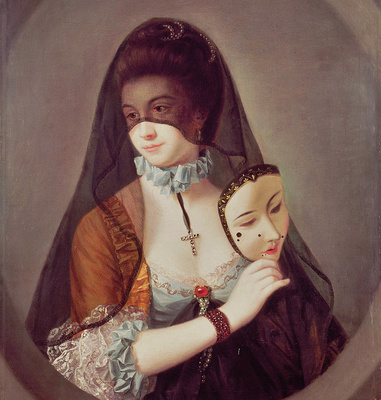
Step into cosmopolitan Madrid, where image is everything, and unveil the true face of love. Word to the wise: without your wits about you, you’ll get caught in a game of who’s who with the beautiful Angela and Magdalena! Our two leading ladies soon learn that in the game of love, an eye for an eye takes on a whole new meaning.

All wrapped up with the dry wit and sarcastic narration from Melchor’s right hand man, the savvy Ventura, La celosa de si misma is the must-see show of the season!

That Time the French Aristocracy Was Obsessed With Sexy Face Stickers | Collectors Weekly

#idare #takemyhand #eye4eye #siglodeoro #lacelosadesimisma #comedia #nationaltheatre #womenintheatre #tirsodemolina

Marketing Blurb – George Hickey

‘¡Que ser negro en el mundo infamia sea!’
‘Born black, born infamous!’ 

What does it mean to be black in modern day America? Are people defined by the colour of their skin?

In this modern adaptation of Andrés de Claramonte’s El valiente negro en Flandés follow one man’s journey to join the police force, staying true to his character in a white-washed world of police brutality and institutional racism. With the world against him, his determination to fight against the judgments of others leads spurs him onwards…

Enter Juan de Mérida, our young black protagonist, who leads us through the trials and tribulations that await all people of colour navigating the land of the “free”. Rejected from his local police force and branded a thug due to the colour of his skin; Juan travels across the country to pursue his dream and to prove to himself, and to the world, that strength of character speaks volumes against the preconceived notions of colour and blackness in America.

Along the way, Juan meets Leonor, a non-binary person who is joining the police to follow the man they love.  They provide an emotional insight into the epidemic of gender and sexuality based discrimination in America. Hostile and ignorant, Juan refuses to engage with Leonor, exposing the deeper issues of the miseducation and demonisation surrounding gender fluidity people in modern society.

Juan emerges Sheriff de Alba, promoted due to his integrity and skill in the force, a beacon of hope signalling the importance of holding fast to your beliefs in the face of oppressive marginalisation.

This play will leave you questioning the status quo of race and gender; ruminating on how your actions and words can have profound effects on the lives of marginalised and outcast people.

Please sign in first
You are on your way to create a site.